Tuesday, May 13, 2014

Rich Poor

"Changed Life of the Poor: Better Off, but Far Behind"
http://www.nytimes.com/2014/05/01/business/economy/changed-life-of-the-poor-squeak-by-and-buy-a-lot.html?ref=economy

In the article, "Changed Life of the Poor: Better Off, but Far Behind," the consumption of the poor to the middle class is compared. What is interesting to note is that the prices of goods such as housing, personal care, clothing, vehicles, cellphones, toys, personal computers, equipment, and televisions have plummeted, but prices for college, child care, health care, maintenance, and food have skyrocketed. This is predominantly why the poor might seem richer especially as compared to the rest of the world, however, in fact they are much poorer then ever before.

One of the overwhelming contributing factors to poverty is lack of education. Without education, people are much less likely to be able to move themselves up in society. Education opens up many doors for people such as better jobs with higher pay. That higher pay can pay for a better living space, food as well as better food in general, health care, and just a better standard of living in general. However, because education prices have skyrocketed, the already poverty stricken people are even more unable to pay for an education. Therefore, causing a circle to arise where they remain in their lower poor class and their children will also most likely end up as poor.

Furthermore, unessential items are now being offered at lower prices such as material goods. These material goods also make people settle. They feel like they are richer because they have more things and are able to show off more. Having more things makes them content in the place they are even if they are struggling to meet rent or having to work 3 jobs a week to make ends meet or buy food for their children. They have nice things, so they are actually doing quite well in their mind. They have less of a desire to move up and remain in the area that they are content with the material items they have obtained. This is a horrible process.

Companies are continuing the cycle by lowering material good prices. Material good prices should be the prices that skyrocket, while essentials to the development of the people as a whole such as education and health care should have prices lowering. If this is the trend that continues, the circle will continue and the poor will continue to believe they are richer, when in fact they are only making themselves poorer.

Growing the Future

"Seeing Future in Fuel Cells, Toyota Ends Tesla Deal"
http://www.nytimes.com/2014/05/13/business/energy-environment/seeing-future-in-fuel-cells-toyota-ends-tesla-deal.html?ref=energy-environment

In the article, "Seeing Future in Fuel Cells, Toyota Ends Tesla Deal," Toyota is allowing its battery-supply deal with Tesla Motors to expire this year so that it can focus on building sustainable cars. Toyota has long remained stubborn in not revitalizing its cars to research electric automobiles or begin competing with vehicles that are more sustainable. However, with the severe climate change that is being seen and the growing amount of carbon dioxide emissions breaking down the ozone as well as the decreased profits, Toyota has decided to take a risk and invest in something that can grow in the future.

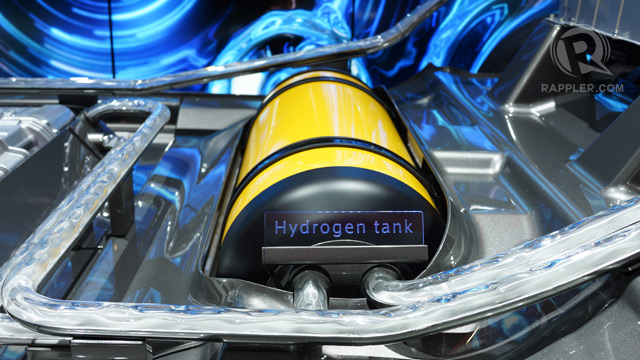
Rather then focus on the electric automobiles that have already been seen in the market, Toyota will be building cars that run on hydrogen fuel cells. This allows them to be first to market and take over a large part of the market share. The costs are higher of course, what with increased Research and Development, therefore these sustainable cars will most likely be higher priced as well, but they would lack the carbon dioxide emissions that are so toxic to the world that is slowly wasting away.

It has begun where companies, governments, and people can no longer ignore the detrimental effects business, driving, and increased populations are having on the world. It is being destroyed. Overconsumption and overpopulation are driving forces for the ruin of the world. There will not be any natural environment left for our future children at the rate we are going. Toyota's car could possibly be the breakthrough needed in sustainable vehicles. Or it will lessen the impact on the atmosphere until a newer more innovative technique is unearthed.

Customers are always concerned with the range of the vehicle and the cost. However, if this risk pays off for Toyota, it will pay off for the environment, and other companies will flock to the market following Toyota's technique and possibly imitating the car to also vie for a part of the market share.

Globalization of Terrorism

"Africa Likely to Become a Terrorist Continent"
http://vibeghana.com/2014/04/08/africa-likely-to-become-a-terrorist-continent-ahwoi/

As indicated in the article, "Africa Likely to Become a Terrorist Continent," terrorism in Africa is widely expanding and if efforts are not made to stop the spread, Africa will predominantly become a terrorist nation. While some countries are taking measures to stop the spread, it is not enough unless conscious effort is made by all.

The real issue is what causes the spread of terrorism. It might start off with one person who manages to influence others until there is now a small group that are performing terrorist acts and committing violence. However, these groups tend to have money and be successful. The predominant factor for the globalization of terrorism is poverty. Poverty stricken areas cannot fight terrorism because (1) they could die quite easily without access to a means of protecting themselves, (2) the government cannot protect the people properly, and (3) many poverty stricken people will join the terrorist group due to the offer of essential needs. The terrorists have money and will often attract new members by paying them and providing shelter. If they do not provide shelter, the people now have a means of paying for their own. With so many people outside in the elements, starving, disease ridden, and in constant fear for their life and the lives of their families, why wouldn't they join a terrorist movement that provides for their needs even if the goal is not what they want?

The government in Ghana has made action against terrorists by fighting against money laundering, financing of terrorism, and the proliferation of weapons. They have passed Anti-Terrorism laws as well. However, if the government is not accurately enforcing them, it goes nowhere. Also, with money laundering, this involves other countries. Many times the money is being sent from a richer country to countries in Africa and is harder to catch. If they cannot convince the richer countries to also take a stance and fight against the terrorist practices, they will get nowhere. These countries only seem to be targeting the financing of the activities, which is all well and good, however, what about protecting the innocent bystanders that continue to die in masses each and every day? There needs to be multiple avenues that are being taken to suppress the terrorist groups.

Also, when a group begins stealing children, drugging them, and involving them in their practices as "Invisible Soldiers," this is the point of no return. Severe action should be taken by the government and the enemy needs to not just be suppressed, but exterminated before the innocents really get hurt.

Tuesday, April 22, 2014

Conflict between the Country and Company

Conflict Between the Country and Company

"Battling for a Safer Bangladesh"
http://www.nytimes.com/2014/04/22/business/international/battling-for-a-safer-bangladesh.html?ref=international

As indicated in the article, "Battling for a Safer Bangladesh," Bangladesh has consistently found extreme unsafe conditions in factories and companies for employees to work in. There have been many issues with factories collapsing and killing those inside. Just last year, another factory collapsed killing 1,129 people. This has obviously inspired conflict in the public and has resulted in a conflict between the country's people and the companies that they work in.

For the conditions found, there are extreme infrastructure problems such as overloaded buildings so there are cracks in the building foundations, the storage spaces are flammable, and unsafe fire escape routes. Adding to those problems, you also have the political maneuvering and corruptions involved.

If the conflict between the country and companies is not enough, in efforts to fix the problems and satisfy the public, companies have created alliances to combat these. However, now these two alliances of companies, Bangladesh Accord for Fire and Building Safety (H&M, Carrefour, Mango) and the Alliance for Bangladesh Worker Safety (Walmart, Target, Gap, Kohl's), are feuding. Basically, both alliances are saying they are inspecting the factories better and are working on improving the issues better then the other alliance. To make matters worse, universities are now saying the companies that sell their products must align with the company that the university chooses or they can't sell their products.

Out of one conflict, there has arisen many others. Conflicts between alliances, between the public, and between companies and universities is very unnecessary. The Accord has inspected less factories, but closed more and the Alliance has inspected more factories, and only closed one. These alliances are now going back and forth saying they are not being truthful and only closing or not closing factories to look better to the public.

The benefits of this conflict between the Accord and Alliance is that there is a better chance that the workers will see more safe conditions. The companies want to be seen as better and have better brand recognition so are striving to provide more. Some are providing wages to those who worked in factories that closed. This means that they are resolving the conflict between the Bangladesh population and the companies, which is good. This also means that there will be safer working conditions, people are more likely to survive and benefit the economy, they will be paid and can support their families, which could also lead to less poverty.

The conflicts between the companies and the universities is unnecessary and is just creating a bad image for each. All of the universities and companies should work together instead of separately to benefit the Bangladesh population because tensions could hurt the population in the long run. Competition between companies is beneficial to a point and they  must make sure they do not reach that point. Overall, we will be seeing improved conditions for Bangladesh in the future.

Sunday, April 20, 2014

Globalization of Disease

Globalization of Disease

"U.N. Struggles to Stem Haiti Cholera Epidemic"

http://www.nytimes.com/2014/04/20/world/americas/un-struggles-to-stem-haiti-cholera-epidemic.html?ref=world

Since 2010, Cholera has been a rampant epidemic throughout Haiti. The question on everyone's mind, however, is if the United Nations brought the deadly strain of cholera to Haiti. It is the belief of the Haitian government that in an attempt to provide aid to Haiti, the United Nation's peacekeepers transmitted the disease to the Haitian population. Even now, the UN is within Haiti trying to provide aid and they are unable to cope with the amount of cases that have broken out. The UN did not raise even a fourth of the $38 million it needed to provide aid to these civilians especially the water purification tablets. Some clinics have been forced to shut down because they are unable to treat those inflicted and there are more and more patients that are dying from cholera.

The United Nations is floundering. Not only is it believed that they transmitted the disease, but they are not able to uphold their promises. They promised to vaccinate the 600,000 people who are vulnerable to cholera and they did not raise the money. They promised to build Haiti's water and sanitation infrastructure, which is vital to ridding Haiti of cholera, but are unable to due to lack of funds. Since 2010, 8,562 people have died. In 2011, there were 350,000 reported cases of cholera. Many aid groups of moved out of Haiti as well. There were 120 clinics, but now there are only 40.


Cholera has run rampant due to the lack of clean drinking water and sanitation as well as the lack of a good health care system. People  need to drink fluids. If they cannot purify their water, they still must find some type of fluid to sustain their bodies or they will die of dehydration. Many resort to drinking the contaminated water because there are no other options open to them. Many now who arrive at the clinics either die before they reach it or die soon after entering. This is largely due to the longer travel time to get to the clinic to receive treatment. Children are also most susceptible because of their low immune systems, which makes it even more traumatic for the rest of the population and in the long run, the economy. That is the next generation that would support the elderly in Haiti as well as fill the open positions for jobs with strength and intelligence.


The outbreak has also spread to the Dominican Republic, Cuba, and Mexico, however due to the better health facilities, there is not such a large death toll.

Research even indicates that Haiti now suffers due to the United Nations. This strain of cholera is an Asian strain found in Nepal. Hundreds of the United Nations personnel that traveled to Haiti were originally stationed in Nepal and often drank and bathed in the contaminated river tributary there. Haitians are demanding the United Nations provide reparations for the damage caused. They want $100,000 for each person who died from the outbreak and $50,000 for each that was received the disease. The people are angry and even Haitians working in the clinics have not been paid in months and for some even years. The United Nations has yet to speak on the topic.


This is a huge issue, however. The United Nations does provide aid to many countries who desperately need it. This is a fantastic thing to do to help those in need. However, precautions must be taken especially when traveling between countries where one might have a disease that could cause a large number of people to die. It is very easy to transmit diseases with a person. These diseases function so beautifully due to lack of sanitation, drinking water, healthcare, and poverty. People cannot pay for antibiotics and they most likely to receive the disease. The United Nations must really think of how they can act differently in the future to prevent the globalization of disease.


Facing Environmental Issues

Facing Environmental Issues

"China's Eco-cities: Sustainable urban living in Tianjin"

http://www.bbc.com/future/story/20120503-sustainable-cities-on-the-rise

Watch the Video here:
http://www.economist.com/blogs/analects/2014/04/eco-cities-china?zid=313&ah=fe2aac0b11adef572d67aed9273b6e55

The article, "China's Eco-Cities: Sustainable Urban Living in Tianjin," is an article that talks about China's endeavor to face the environmental issues that have plagued their country. China realizes that its population continues to grow and that it will need to provided housing, infrastructure, water, food, and jobs to all of these individuals while combating the rising pollution and social issues. The country's government has already made moves to begin this process by forcing the largest polluters to move out of the largest cities so that one area will not be so heavily polluted.

China has also begun the construction of what are called "eco-cities." They have created large model blue-prints of what their eco-cities will look like and involve as well. China has begun construction in an area called Tianjin with the Singaporean government. This city will house 350,000 people and involve a low-carbon, green environment. This project is meant to be finished by 2020 and is still under construction. China hopes that when this city is completed, it will provide sustainable blueprints for other countries around the world who would like to become more environmentally friendly.

What is most interesting about this project, is that China chose Tianjin. Tianjin is a barren wasteland. It was the site where industries dumped their toxic waste, is barren and is next to one of the world's most polluted seas. The choice was important, however. China has basically ruined the area and made it uninhabitable. Therefore, they want to prove to the world that the damage can be undone. That any area can be utilized and made green and provide a safe, healthy living environment for the future. It is important to China to prove that any location can be cleaned up to become healthy. They succeeded in the clean-up part. It took 3 years, but it occurred.

Within the incomplete city, there are all kinds of sustainable energy resources. There are solar-energy panels, wind turbines, solar-powered street lights, 1/5 of the energy will be emission-free, ground-source heat pumps will be used, and there are fragrant trees everywhere. The buildings utilize sound and motion sensitive lighting, there are smart controls, pneumatic municipal waste collection systems, and General Motors will test their new eco-friendly vehicles there.

60 families moved in in March to begin the testing of the locations. Buildings involve water-saving sanitary fittings, insulated walls and double-glazed windows, south facing orientation to optimize heat, and there are green spaces everywhere . Every type of greenery has a purpose as well. There are reed beds that attract birds and help clean water. There are bike paths and walking paths everywhere so people will be more inclined to actually use other transportation methods then driving. Companies are moving in quickly too and all are using sustainable energy and processes to function in such an eco-friendly city. The only issue the city faces at this moment is water provision, but this is an issue they are working on. Overall, China has made a huge advancement in becoming more environmentally friendly and stopping the pollution that is in abundance. Let us hope that soon all countries will follow.


Corporate Responsibility: Use of Marketing

Corporate Responsibility: Use of Marketing

"All of Thailand is Compulsively Weeping Over this One Life Insurance Ad"

http://www.businessinsider.com/thai-life-tearjerker-ad-2014-4

Recently in Thailand, companies have taken it upon themselves to market their products through the use of emotional advertisements. "All of Thailand is Compulsively Weeping Over this One Life Insurance Ad" talks about 4 specific advertisements that were created by Thai Life Insurance, Google, and Thai mobile company TrueMove H. These advertisements use the strategy of emotion to inspire viewers to invest in their products and also to "share" these videos with others.

Thai Life Insurance

Thai Life Insurance

Google

TrueMove H

What is truly phenomenal about these advertisements, however, is that recently Thailand has undergone a company-wide move towards these commercials that undertake the idea of giving and responsibility. Each commercial tells a story that in some way involves the use of one individual giving of themselves to benefit another. What do they receive in return? Nothing. They are doing it for the emotion and for the idea of helping another in need. This is a huge endeavor that has been sparked. Many of these companies are hoping in a world that is so stricken with chaos in many areas, that it will inspire individuals to want to better themselves and aid others. It also is in a hope that companies around the world will be inspired to provide more aid to those in need and to revitalize their production capacities, work-life, people, and all business processes to be more environmentally friendly to others and to be more humane.

Attack on Gay Rights

An Attack on Gay Rights

"Egypt Jails Four Men for Gay Acts"


"Egypt Jails Four Men for Gay Acts," is an article that is dedicated to the injustice occurring in Egypt in regards to freedom of sexual expression and individuality. Men were arrested, charged, and convicted for attending sex parties while dressed in women's clothes and wearing make-up. In Egypt, as in many countries around the world, homosexuality is looked down upon greatly and measures are taken to enforce what is considered "normal" by not partaking in or expressing that sexuality or practice. Egyptian law doesn't ban homosexuality outright, however, they have other laws that can be utilized to try and convict homosexuals. 

This has also been occurring more frequently in Egypt since their President Mohammed Morsi was ousted in July of 2013. Human Rights advocates are worried because Egypt sets the trends for other Arab regions in that area. They are worried there will be an increase in arrests across that region now because of Egypt. This is also a mark against political freedoms. Without the ability to express individuality and gender identity, people live in a state of oppression and fear. Anyone can be accused and anyone can be convicted in a system that does not cater to those with a different sexual orientation then what is considered "the norm."

It is not only in Egypt that homosexuality faces this discrimination. Russia has fierce discrimination as seen in the news during the Olympics of this year. It runs rampant and there are legislative proposals that discriminate against individuals on the basis of gender identity or sexual orientation. These were introduced to the Russian Federation. Any protesters are attacked, harmed, or simply disappear. Those who are found or suspected to be gay are brutally attacked, raped, and sometimes killed by those against homosexuality to use as an example. Also, if those attacked survive and try to press charges, they receive ill treatment by the justice system and rarely ever receive justice. 

In some countries (5 and parts of 2 others) homosexuality is punishable by death. These countries are Iran, Mauritania, Saudi Arabia, Sudan, Yemen and parts of Nigeria and Somalia. 70 other countries simply arrest and imprison their people due to their sexual orientation. There are bans on marriage, unequal ages of consent, laws banning the promotion of homosexual acts, and other  acts against human rights. In the map indicated below, countries in red punish homosexuals with the death penalty, dark orange, imprisonment, light orange laws against gay expression, and beige different age of consent. Very light gray homosexual acts are legal, light grey there are laws against discrimination, grey there is a marriage substitute, and dark grey marriage. As you can see, North America and parts of South America allow marriage, Australia has a substitute, and other parts of the world homosexual acts are legal.


Also of note is that in the last 200 years countries have been either decriminalizing same-sex relationships or criminalizing them. Decriminalization was becoming popular, however, recently, punitive laws have strengthened existing laws against homosexuality. India reinstated a 153 year old law that criminalizes gay sex in 2013. Also, the United States who always seems to be at the forefront of human rights, did not decriminalize homosexuality until 2003. At the beginning of 1789, homosexuality was illegal in 126 countries. 

Criminalized Date Decriminalized
126 countries    
  1791 France
  1793 Monaco
  1795 Belgium
    Luxembourg
  1811 Netherlands
Singapore 1819  
  1822 Dominican Republic
  1831 Brazil
Russian Empire 1832  
  1837 Peru
Hong Kong 1841  
  1858 Turkey
India 1860  
Bangladesh    
Bhutan    
Pakistan    
Myanmar    
Sri Lanka    
Ghana 1860s  
Seyshelles    
Sierra Lione 1861  
Jamaica 1864  
San Marino 1865  
Zanzibar 1867  
  1869 Suriname
German Empire 1871  
  1872 Mexico
Fiji 1874  
Kiribati    1880s  
Maldives    
Marshall Islands    
Soloman Islands    
Western Samao    
Lesotho    
Swaziland    
  1880 Paraguay
Togo 1884  
Botswana 1885  
Portugal 1886  
  1887 Argentina
Belize 1888  
Papua New Guinea    
Somalia    
Gambia    
  1890 Italy
Malawi 1891  
Zimbabwe    
Uganda 1894  
  1896 Taiwan
Kenya 1897  
Burundi  1899 Honduras
Sudan    
Nauru    
Nigeria  1901  
Uganda   1902  
Brunei 1906  
Vanuatu    
Zambia               1911  
  1917 USSR
Namibia     1920  
Tanzania    
  1932 Poland
  1933 Denmark
USSR 1934 Uruguay
  1940 Iceland
  1942 Switzerland
  1944 Sweden
  1951 Greece
    Jordan
    West Bank
  1957 Thailand
  1961 Mongolia
  1962 Czechoslavakia
    Hungary
Algeria 1966  
  1968 East Germany
    Bulgaria
  1969 Canada
    West Germany
  1971 Finland
    Austria
    Costa Rica
Cameroon 1972 Norway
  1973 Malta
  1975 Timor Leste
  1976 Bahrain
  1977 Croatia
    Montenegro
    Slovenia
  1979 Cuba
    Spain
  1981 Colombia
  1982 UK
  1983 Portugal
  1986 New Zealand
    Haiti
  1988 Israel
  1989 Liechtenstein
  1990 Andorra
  1991 Bahamas
    Ukraine
    Hong Kong
   Nicaragua   1992 Latvia
    Estonia
  1993 Australia
    Russia
    Ireland
    Lithuania
    Guinea Bissau
  1994 Belarus
    Serbia
  1995 Djibouti
    Moldova
    Albania
  1996 Macedonia
    Romania
  1997 China
    Ecuador
  1998 Cyprus
    Kazakhstan
    Kyrgyzstan
    South Africa
    Tajikistan
  1999 Chile
  2000 Azerbaijan
    Georgia
  2001 Bosnia and Herzegovina
  2003 United States
    Armenia
  2004 Cape Verde
  2005 Marshall Islands
  2007 Vanuatu
  2008 Nepal
    Nicaragua
    Panama
Burundi  2009 India 
  2010 Fiji
India  2013  

Tuesday, March 18, 2014

Our Mission: Corporate Responsibility

“Turning Coffee into Water to Expand Business Model"


“Turning Coffee into Water to Expand Business Model” by Stephanie Strom, is an article indicating the new risky business venture TOMS is undertaking in another effort to expand its business practices to further the betterment of the globe. One might ask, “How or why is this significant?” The issues of water scarcity and sanitation are huge issues that are becoming major problems for all co
untries not just a select few. Even in the United States, recent news has indicated the pollution of waterways and drinking water in North Carolina. TOMS Company is endeavoring to help constrain the major issues of water scarcity and sanitation around the world and reduce the billions of people that are affected. Without access to clean drinking water and sanitation, countries are prevented from furthering their development.

Water Stress


As noted in the maps below, “Water Stress” and “Total Population: Access to Sanitation,” these issues of water scarcity and sanitation are affecting all countries and continents. The United States is even beginning to see an increased level of water stress, however, their sanitation accessibility is still very high. Some countries have more than 50% of their population being unable to access proper sanitation, which impedes their quality of living and some have supreme water stress with absolutely no accessibility to physical water whether it is for drinking, agriculture, or sanitation purposes.

TOTAL POPULATION: ACCESS TO SANITATION


                TOMS is a company completely committed to social responsibility. TOMS Company created an entire business model called “One for One” in an attempt to help fix global problems. This originally began with shoes, then eyeglasses, and now as indicated in the article, coffee. For every pair of shoes sold, another pair is given for free to those in need. This is the same for all business products. Their strategic vision, “TOMS is in business to help improve lives. We identify a global need and create products to help address them. This simple idea is what makes us more than a company—we’re a movement that’s continually evolving” (TOMS Shoes, 2014). With the development of a line of coffee, TOMS identified the need for sanitation and water availability. For any coffee sold, “the sales will be used to provide clean water for cooking and drinking as well as for sanitation to the more than two billion people around the globe the United Nations estimates lack such essentials” (Strom, 2014). Each bag of coffee covers a week’s worth of clean water financing for one person. So far, this “One for One” business model has been quite successful for the company and for the betterment of global challenges. It has been so successful that many companies including blue-chip companies such as Neiman Marcus have undertaken the same business model. General Mills now donates computers to African children due to its sales of Betty Crocker Fruit snacks. The “One for One” business model was extended to eyeglasses and coffee due to criticism of the company not addressing the “fundamental problems of poverty” (Strom, 2014). Blake Mycoskie, the founder of TOMS, took this as truth and indicated “There are two things you need to alleviate poverty: education and jobs” (Strom, 2014). Therefore, his efforts expanded to the coffee business. He also pledged to build a manufacturing facility in Haiti to increase jobs for the country. They will also be supplying sanitation and hygiene education in developing countries to help prevent the spread of the issues.
                How does a company manage to succeed with its business plan so quickly? TOMS offers shoes that are constructed with sustainable and vegan materials and they invest in their employees. Their goal, “In the coming months, we’ll broaden our understanding of our product and their impacts, explore additional sustainable materials and designs, and deepen our conversation with our supply chain partners. As we climb the mountain in front of us, we’ll celebrate our success while eyeing that next peak in the distance” (TOMS Shoes, 2014). They identified a need in the societal environment and recognized they should take advantage of this societal need and profit off of it. They identified the need to focus on the betterment of their employees in the task environment and create a wonderful quality of work life, and good ethics and morality in each employee. The company identified potential agency costs found with holding their production facilities and supply chains in China, Ethiopia, and Argentina and monitor their overseas suppliers and vendors to ensure the mother company’s corporate responsibility standards are being upheld. They were also first in the industry with this particular type of service of donating one of each product for every one that is sold. TOMS does have the threat of new entrants now because other companies are realizing the benefits of their business model, however, TOMS keeps expanding their product lines and maintaining their success. TOMS also faces the threat of imitability. Their service can be easily imitated by other companies who have realized the worth of the model. What other companies cannot take, however, is TOMS’ tacit knowledge. It is embedded in the company’s culture. Their corporate culture is one completely formed of social responsibility.
                With the betterment of the company and the mission to improve the global situations of billions, TOMS Company’s corporate reputation is highly regarded by the public. Blake Mycoskie hopes that once people understand the quality of the product as well as the impact each has improving situations for the billions, they will endeavor to purchase TOMS’ products and also make it their mission to help those in need.

Bibliography
Strom, S. (2014, March 11). Turning Coffee into Water to Expand Business Model. Retrieved from New York Times: http://www.nytimes.com/2014/03/12/business/turning-coffee-into-water-to-expand-a-one-for-one-business-model.html?action=click&module=Search&region=searchResults%230&version=&url=http%3A%2F%2Fquery.nytimes.com%2Fsearch%2Fsitesearch%2F%3Faction%3Dclick%26re
TOMS Shoes. (2014). TOMS Company Overview. Retrieved from TOMS: www.toms.com